The High Cost of Maintenance: Why Cutting Corners on Flooring Is a Bad Investment

Why the Floor Is the Foundation of Your Industrial or Warehousing unit?

In industrial and warehousing facilities, the flooring takes the most abuse—yet it’s often the first place businesses try to cut costs. That initial saving? It rarely pays off in the long run.

The Hidden Price of a Cheap Floor

Poor surface preparation. Substandard materials. Rushed installation.

They might pass visual inspection at first, but problems begin to surface soon after, usually after "so called DLP period"

Continue reading
  7 Hits

You have successfully installed EasyBlog

With EasyBlog, you can be assured of quality blogging with the following features: Drag and Drop Blocks Add elements to your blog with a simple drag and drop element blocks. Blog now, post later You can compose a blog now, suffer temporal writer's block, save and write again, later. Social media sharing Automatically post into your Twitter, Faceboo...

Continue reading
  6 Hits

Why is it important to clean your warehouse floors?


While most of the time and attention of the warehouse supervisors is focused on making the men and the machinery work, no one pays attention to a supposedly less important aspect, the cleaning of the warehouse floor.A lot of energy and time goes into ensuring that forklifts work, deadlines are met, conveyors operate properly, and everything moves like clockwork.However, due to the extensive work involved and that too in a time bound manner, cleaning warehouse floors is no mean feat.

This is a tragedy because even though floors endure a lot of wear and tear on a daily basis, they aren’t maintained properly. They are subjected to spillage, tire scratches from MHE as well as debris, physical impact, chemical washes etc.

One needs to understand that keeping a warehouse floor clean not only keeps the products in good shape, it increases the lifespan of a product and saves it from getting exposed to dust and dirt.Lack of maintenance of floors is not only an unpleasant sight, it is also a safety and health hazard, especially in the case of food production companies and pharmaceutical companies & laboratories.

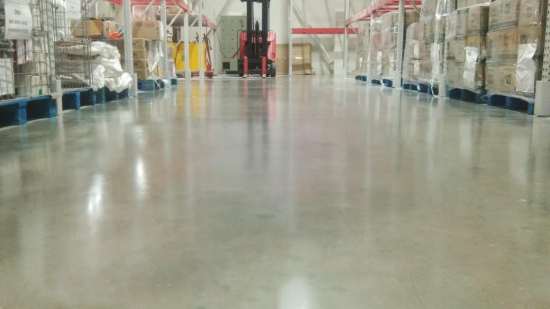
Thus, one must ensure regular and timely maintenance of floors by a first level cleaning of stains and debris to prevent slips and mishaps. And to take it a step further, a regular cleanup to remove stains and restore gloss can go a long way in increasing the longevity of the floor.This is where polished concrete floors have an advantage over regular floors. Their shine and sheen requires low maintenance and is easy to clean, which makes them a low maintenance option.

Continue reading
  9 Hits

Is your warehouse flooring Robo-ready?

According to a report, the value of the Automated storage and retrieval systems  (ASRS) market in 2017 was 12.41 billion USD and is expected to nearly double by 2023.ASRS & Process Automation Systems is widely used in manufacturing facilities, distribution centers, and warehouses throughout the world.

The dynamic change in technological innovations has made modern day warehousing ahead of its times. And the concrete flooring which was once neglected and considered unimportant has become the soul of the warehouse.

Flat concrete flooring (FM2 type) has direct impact on the productivity and efficiency of the floor. If the floors are uneven or flawed, it will not only slow the speed of work but also cause mishaps and downtime, resulting in massive losses.Today, the concrete floors are designed and built with a provision to support artificial intelligence (AI) based robotic MHE and automations. This has taken the performance of distribution centres to a superlative level.

Being the pioneers in Concrete Flooring, BGSB leads in high performance floor construction of robotic warehousing solutions in their flooring designs. These ASRS & VNA type warehouses not only reduce labour costs and increase sorting capacity, but also minimise human error.Choose BGSB for state-of-the-art flat concrete floors that are designed to meet the technological demands of the warehouses in this dynamically changing era.

  8 Hits

The Future of Flooring - Laser FM2 & FM3 Floors

The Future of Flooring - Laser FM2 & FM3 Floors

With the dynamic growth of e-commerce and industrialisation, the demand for perfect Flooring is inevitable. Since Flooring is the edifice on which the warehouse and its productivity lies, this peaks the need for Faster Floors, Flatter Floors and High Performance Floors. This is the need of the hour in every warehouse and industrial facility that is striving to meet the ever growing consumer demand.

This puts the flooring contractors under a lot of pressure as the demand of the customer increases by the day. At BGSB, we bring together the finest amalgamation of machine and manpower, experience and expertise and cast Superflat Laser FM2, FM3 Floors, DM1 Floors, Jointless Floors, Steel Fibre Reinforced Concrete Floors to name a few.

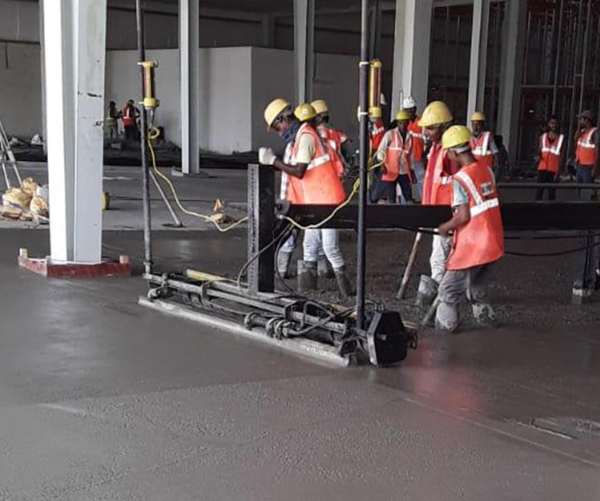
To ensure optimum efficiency and smooth operations, BGSB has procured top-of-the-line laser screed machinery that helps in achieving the desired results. Laser technique helps in covering a wider area that reduces the time taken and enhances the efficiency. It reduces the dependency on manpower as it operates with technology and the end result is accurate, flawless and superflat.

The tolerances achieved with this machine in free movement slabs are FM2, and FM3 in accordance with the TR34.

Continue reading
  6 Hits

How to ensure your VNA Warehouse Flooring works best for you?

Owing to space difficulties and storage issues, VNA storage has become the most obvious choice for warehouse facilities.

VNA storage warehouses have evolved to be one of the most efficient and productive way to stack stuff and meet the growing need for utilising every bit of space. One very important factor in the success of a VNA warehouse is its flooring which determines the speed, safety, smooth operations and productivity of the warehouse.

VNA Warehouse floors are meant to be flat and leveled in accordance with TR34. They are built and designed with meticulous planning and specifications and need to be in proportion with the height and width of the storage racks and the aisles. The higher the rack height, the flatter will the floor need to be.

Another very important factor in the efficient operations of VNA Warehouse is the flawless movement of Heavy Equipments that need to be carefully manoeuvred between the aisles and depends on the floor flatness and levelness. VNA storage warehouse must have jointless and durable floors in order to ensure safety, productivity and speed.

In order to build and design world class VNA storage warehouse, BGSB has state of the art machinery, futuristic technology, highly skilled manpower. BGSB casts high performance VNA storage floors in a way that requires less maintenance ensures optimum productivity. We study the usage, the height, the weight and then create a roadmap of design and build that is carried out by our team of specialists.

Continue reading
  7 Hits

Smarter Warehouses Need Smarter Floors in 2025

Why Your Warehouse Floors Are More Important than Ever in 2025

As warehouses embrace the future of automation, robotics, and AI, their floors must keep up. Today’s warehouse floors aren’t just for holding inventory—they are key to ensuring smooth operations. From robots moving goods to forklifts gliding seamlessly across the floor, warehouse flooring technology plays a huge role in making modern logistics efficient and safe.In this guide, we’ll explore the top trends in warehouse flooring for 2025 and how BGSB Concrete is paving the way for smarter, more durable floors.

1. Super Flat Floors: A Must-Have for Robots and Automated Systems

Why It Matters:


Robots and automated delivery systems require smooth, perfectly levelled floors to operate at peak performance. Even a slight bump or uneven surface can cause automation to malfunction, reducing efficiency and increasing downtime.Our Solution:
We use laser robotic system and highly skilled operators to ensure ultra-flat casting of floors that are optimised for automation. The result? Smooth, levelled and flat surfaces that support even the most advanced and sensitive robotic systems and ASRS racking.Benefits:* Increased efficiency in automation
* Reduced maintenance costs for equipment
* Enhanced safety for workers and machines

2. Fewer Joints, Fewer Problems: Jointless & seamless Floors for Maximum Durability

Why It Matters? Traditional warehouse floors are often riddled with joints. Over time, the edges of construction joints tend to crack resulting in damaged joints, especially under heavy loads or constant MHE traffic. These imperfections can disrupt or slow down automated workflows and increase the need for repairs. In addition it also leads to damage of jerk sensitive PU wheels of MHE and the replacement cost of such wheels goes north of $1500 approx. 


Our Solution: At BGSB Concrete, we specialise in jointless & seamless floors, with large pour - hybrid design using weld mesh, steel fibres and Shrinkage Reducing Admixtures (SRA) to eliminate the common issue of shrinkage cracking. This means less or NO cracks, smoother movement, and longer-lasting floors. BGSB uses and promotes use of "Glide Armour Joint” due its design versatility which ensures super smooth load transfer over the joints. 


Benefits:* NO downtime for repairing joints

Continue reading
  8 Hits

The High Cost of Maintenance: Why Cutting Corners on Flooring Is a Bad Investment

Why the Floor Is the Foundation of Your Industrial or Warehousing unit?

In industrial and warehousing facilities, the flooring takes the most abuse—yet it’s often the first place businesses try to cut costs. That initial saving? It rarely pays off in the long run.

The Hidden Price of a Cheap Floor

Poor surface preparation. Substandard materials. Rushed installation.

They might pass visual inspection at first, but problems begin to surface soon after, usually after "so called DLP period"

Continue reading
  6 Hits

Is your floor flatness affecting your warehouse efficiency?

A warehouse or an industrial facility is the hub of all action. That makes it prone to many issues and challenges. One of the biggest hazards that a warehouse faces is the safety hazard.

One of the key factors responsible for contributing to the safety of a warehouse is its flooring. Many structural issues are caused by weak or unlevelled surface. Floor undulation is the primary cause of mishaps such as tripping incidents as they affect the stability of the floor thereby endangering the safety of the workers.Poor floor flatness also have negative impact on the performance of machinery and the tools in the warehouse. If the floors are flat enough, it will be disastrous to the stability of the racking system and the smooth running of the forklifts (MHE) and delivery trucks. In order to avoid accidents it’s usually seen that operators of MHE’s will run the equipment at lower speeds, thereby slowing down the efficiency of the warehouse hence, lowering the productivity.


Thus it is crucial to have flat floors to ensure safety, productivity and longevity of the warehouse. At BGSB, we cast superflat concrete floors for all your warehouse and industrial facility needs that will give your warehouse floors a longer life and a better output. Think flooring, think BGSB.

  7 Hits

Epoxy Flooring Vs Polished Concrete Flooring

While Epoxy is a chemical compound, Polished Concrete is a composite material that is composed and bonded.First, let’s talk about what sets them apart. There are many differences between epoxy and concrete polishing.We all know a warehouse is subject to wear and tear, heavy loads, chemical stains etc. Polished concrete gives a satin smooth and clean surface that does not peel or scratch as compared to epoxy flooring which can scratch.

A warehouse also incurs a lot of expenditure and the costs involved are astronomical. Polished Concrete flooring enhances light reflectivity by 100% and reduces the electricity costs by leaps and bounds.Also, Polished Concrete Flooring are low maintenance floors that remain presentable and clean if maintained properly as compared to an epoxy floor which requires various cleaning procedures to remove dust and debris build up.

Thus, it is no guessing game that when it comes to Warehouse Flooring, Polished Concrete flooring certainly has an edge over Epoxy flooring and is a much smarter decision. But choose only the best for extraordinary results. Opt for BGSB, the market leader in Polished Concrete Flooring for your commercial space.

  10 Hits

SINUS ARMOUR JOINTS

Concrete Grade slabs are subjected to a lot of internal and external pressures with the maximum harm caused to the edge of the plates at joint location. If floor joints are faulty it will affect the horizontal and vertical movements of the floor which may lead to stress cracks as being exposed to heavy traffic movement and immense earth pressure. 
 

 Sinus-shaped armour joints allow smooth & jerk-free movement of MHE and forklifts over the construction joints and allow proper load transfer between floor slabs. It is because if it’s special shape which is not straight like conventional it classic shaped joints. They not only help in proper load transfer between slabs but also ensure longevity of the floor.

At BGSB, we use the best quality Sinus-shaped armour joints essentially required for constructing sturdy and seamless concrete floors.


  8 Hits

Concrete industrial flooring Using Laser Screed Technology


Laser concrete Floors

The Laser Screed Concrete Flooring guarantees inimitable quantitative and qualitative performance, as well as a considerable reduction in work time and costs. Through the automated system, laser screed machines ensure greater precision in the laying of the concrete, which takes place at the predetermined level, and a total uniformity of the final surface.

The optimization of the seasoning and compacting phase allows overcoming all the problems related to manual laying in terms of flatness, horizontality, reduction of joints and mechanical resistance.

Post-tensioned floors
The "post tension" is the most innovative solution in the field of industrial concrete flooring, a very high-performance procedure that provides for the replacement of the classic reinforcements with mono strand steel cables, treated and sheathed in concrete, and subsequently post-thesis through the use of hydraulic jacks. The result is monolithic floors with reduced thickness, without expansion joints and control, which ensure high flatness and a drastic reduction in maintenance costs, as well as a very high resistance to cracks and boats.

ITS designs and realizes post-tended flooring, following all the phases of engineering and drafting, in particular for environments characterized by the presence of high shelving, high load intensity, the circulation of vehicles with low impression wheels or requiring resin coatings.

  6 Hits

Polished Concrete - 12 Advantages

FM2 FlooringPolished concrete has many advantages due to which it is preferred choice in Industrial Warehouses, Factories. Let us know some of the advantages of Polished Concrete Floors.

1. High strength.

2. Durability. The service life is practically determined by the service life of the building, where the floors are made. Approximately once every 7-10 years, a planned schedule is recommended, consisting of light polishing (the so-called update).

3. Polished concrete floor has high wear resistance.

4. Highest resistance to scratching.

5. Sufficiently high chemical resistance - withstands the impact of the widespread chemical "aggressors".

6. Dust Resistant.

  6 Hits

Characteristics of Industrial Warehouse Flooring

Industrial floors for a warehouse factories should provide both general performance characteristics: resistance to mechanical stress, dust, hygiene; and unique performance properties of the floor for various purposes.The modern warehouse occupies an essential place in the structure of organizations. The protection of the concrete floor of the industrial floor in the warehouse prevents its premature destruction, reduces maintenance costs, thereby improving the performance of the industrial floor.

The choice of industrial flooring can be evaluated on the basis of basic requirements for warehouse floors:

  8 Hits

Types of Industrial Flooring

Industrial Flooring is in great demand and we can broadly classify these floors based on material used. Here are various types of Industrial Floors.

Concrete floors

This is one of the most common types of Industrial flooring, which often serves as a base for the functionality of all other types of coatings. It is the strength, evenness, and reliability of concrete floors that determine the operational characteristics of future floors, made on their basis.

Paint floors

The surface layer is a thin layer coating with a thickness of about 0.3 mm, which protects the concrete, metal or cement-polymer floor from the effects of water, chemically aggressive media and dusting. The polymer coating of the surface layer is excellent for decorating floors, as well as for compliance with hygienic and sanitary standards. However, such floors are quite sensitive to high mechanical loads, in addition, the quality of the base (strength, evenness, and absence of cracks) is of particular importance, since it determines the operational properties of the floor as a whole.

  5 Hits

How To Polish Concrete Floor By Hand - Step By Step

The rough concrete surface becomes dirty and breaks down much faster than polished. In addition, from an aesthetic point of view, polished concrete looks much more attractive. Polishing concrete can be done by own hands, which will greatly improve its aesthetic qualities and performance. After grinding, the floor can be laid on concrete or its surface can remain open.

Preparatory stages of work

To obtain the desired result, it is necessary to perform surface preparation (milling) and grinding. The main tasks of milling are cutting off the hillocks on the surface, removing the influxes, opening the pores. Also during this process, grinding of the upper layer is carried out.

  12 Hits

Importance Of Concrete Warehouse Flooring

Concrete floors are most in demand for equipping warehouses, regardless of whether the floor is being filled or the concrete layer will be finished. Concrete Warehouse Floors are one of the most important elements of a warehouse complex. They experience huge loads, a hard abrasive, mechanical, impact, constantly subject to the influence of chemical elements and temperature changes.

Why Warehouse Flooring Is Important
The warehouse floors are subject to increased requirements. Warehouse Flooring should be:

  • Resistant to abrasive abrasion: one of the main factors in the destruction of storage floors.
  • Resistant to Mechanical Stress: Warehouses often move transport, so the floor covering must have improved characteristics to withstand shear stresses. The same property should have floors in the garages.
  • Resistant to Impact: Heavy objects can fall on the floors. In this case, the monolithic coating should not be violated.
  • Possessing Chemical Resistance: Warehouse floors in the chemical industry are subject to the influence of aggressive liquids: solvents, paints, acids, etc.
    Insensitive to temperature changes: Industrial floors in factories, where elevated temperatures are used with frequent changes, are often violated prematurely. Particularly relevant, additional reinforcement of the base is for storage facilities with access to the street, freezers and refrigerators;
  • Impermeable to Liquids: To ensure that the floors in warehouses are not adversely affected by frequent wet cleanings, and the soil through which no environmentally hazardous substance has penetrated, the coating must not allow liquid to pass through.
  • Non-slippery: Both in dry and wet conditions, to ensure the safety of transport and pedestrians.
    Fireproof and durable : To ensure the safety of the goods or raw materials stored in the storage room.This is why when installing industrial floors for a warehouse, it is necessary to take into account operational requirements, load distribution parameters, and other factors. Do not miss any of these nuances and find the best option for the device flooring will help specialists of the company Prom-Floor.
  7 Hits

How To Lay A Concrete Floor

Due to the fact that concrete floors are capable of withstanding significant loads, their application area is quite large. This type of floor is ideal for industrial facilities (factories, factories, warehouses, vegetable stores, offices, supermarkets, etc.).Also, often a concrete floor is poured into sheds, garages and other economic buildings. The most common is a polished concrete floor, but, for example, in the pig sector demand for slotted concrete floors. If you decide to do it yourself, you just need to carefully study the recommendations on how to properly lay the concrete floor, so that the surface is even, firm and resistant to cracking.

Advice: When starting concrete flooring, follow these recommendations:

If the floor will experience increased loads, then it is necessary to pre-lay the reinforcing frame. For reinforced concrete mesh with insignificant loads; for the device of the concrete floor it is necessary to use cement of mark not lower than M300. Note! After the ramming process, the thickness of the concrete floor should be approximately 12 cm.

  10 Hits

8 Factors That Cause Cracks In The Concrete

The concrete is essentially a cheap material, easy to maintain and durable when applied correctly in buildings, floors or coating. The material is the result of a mixture of cement, sand, water, and gravel, therefore, although resistant, it is usually subject to the appearance of cracks and cracks, which need to be repaired.

1- Incorrect Preparation

Each type of concrete should be prepared with the correct proportions of the materials: cement, sand, water, and stone crushed stone. Any measurement error can cause the concrete to undergo environmental and structural influences, leading to cracks and cracks - as well as being extremely dangerous especially when used in supporting structures such as pillars and bases.

For countertops, for example, the recipe recommended by experts is 50 kilos of cement, 8 ½ cans of sand, 11 ½ cans of stone and two cans of water - where the can should measure 18 liters.

  7 Hits

Concrete Polishing

Concrete Polishing : Best way to treat concrete surfaces.

'Polished concrete eliminates the need for continually replacing your flooring, making it a value for money proposition' says Parmeet Bhalla Director, BGSB Concrete Solutions Pvt Ltd

Concrete polishing is steadily becoming the preferred choice of those looking for the ultimate no-wax/ epoxy flooring material. Thanks to recent advances in polishing equipment and techniques, concrete floors, both old and new, are attaining high-gloss finish that never needs waxes or coatings. The superior durability and performance of concrete mean that it is not surprising that an increasing number of retail, warehouse, and office facilities are opting for polished concrete flooring.Almost any concrete slab can be polished, regardless of its age. Moreover, no special acid agents are required in order to prepare the surface. The initial preparation consists of 5 or more steps of surface grinding. This is done in order to achieve a dense surface. Polishing with resin diamond grids subsequently follows this procedure. Additionally, based on specific requirements, lithium based floor hardeners and penetrating surface densifiers are also used for arriving at the right sheen.

  8 Hits

Contact Us

reCAPTCHA *

BGSB India

BGSB Concrete Solutions Pvt Ltd

Email- info@bgsb.in

Helpline Number

India- +91-9599991020

BGSB Africa

BGSB Concrete Africa Ltd

Email Address :info@bgsbafrica.com

Helpline Number 

Kenya     - +254-788994025

Uganda   - +256-707176737

Tanzania - +255 69 852 7049

BGSB UAE

BGSB Unique Technical Services LLC

Office No : A32, Bin Dasmal Building - 2,
Al Quoz Industrial Area First, Dubai, UAE

Helpline Number 

UAE - +971-502041332